Translate

Showing posts with label Seeds. Show all posts

Friday, March 07, 2014

Friday Five: Things to Buy This Weekend

 
1. Couple of large-ish Long Toms for my olive trees, currently wintering out in the glasshouse;
 
2.  Half a dozen large-ish terracotta pots for my tree saplings, currently wintering out on the terrace steps;
 
3.  Bags of charcoal and plenty of firelighters; if we're to have a warm weekend with Cs into the mid-teens, let's get cooking;
 
4.  Even more packets of seeds, specifically mini cucumbers so I can recreate my Jerusalem breakfasts...
 
5.  Another box of purple latex gloves; one must at least attempt to be stylish when sowing one's seeds.
 

Thursday, January 09, 2014

Sheffield Botanical Gardens; What Is This Plant?

 
Another trip over to the Sheffield Botanical Gardens this afternoon, after an arduous hour in John Lewis replacing half a dozen assorted pieces of Robert Welch cutlery that appear to have gone walkabout since the start of the year. It wasn't arduous at all. Quite the opposite, actually. John Lewis was pretty much deserted, so much so that I wandered up the escalators and bought some lovely little White Stuff woollies and an Alice Temperley dress. But back to the Botanical Gardens, beautifully stripped back by winter and experienced staff supported by tremendously knowledgeable volunteer gardeners...


Now, my charming, witty and erudite readers, I have a little task for you all. Hop in the car and belt up the M1 to Sheffield then career off at J31 along the A57; jump left onto the A61 and stay on it until you get to the big roundabout St Mary's Gate / Waitrose; take the first left onto the A625 Ecclesall Road, and stay on it until you come to the roundabout where you need to go right up the hill onto the B6069 Brocco Bank.  Follow the road up past the student uni flats on the left hand side and swing right as the road becomes Clarkehouse Road.  Near the pedestrian crossing you'll see free parking on both sides of the road.  Park up and stroll across to the Botanical Gardens. Free admission.

 
Walk downhill towards the fountain. Standing with your back to the fountain, sparkling droplets in the bright winter sunshine, walk up towards the glasshouses between the two large herbaceous borders.  About halfway up on the right hand side you'll see a gap in the hedge backing the border, where the following plant grows.  It's about 5' or 6' tall, woody and still with some crimson coloured racemes.  Those racemes would put you in mind of a Corylopsis Pauciflora.


At the end of last year I decided that I really ought to get my photos sorted out into some sort of meaningful order, rather than the strip-dumps of, "2013 summer?" "Sheffield 2013?" Some don't even have that measure of effort. Anyway, suffice to say I've dated, filed and shifted hundreds of photos from last year, and now I can't find a thing. Somewhere I have a picture of the fountain at the Sheffield Botanical Gardens; the one above's in Dublin.

Incidentally, the pictures above of the as-yet-unknown plant (which is just a thinly veiled plea to Helen Yemm to name it), which you'll see EVERYWHERE in Sheffield, were taken sometime in the Autumn.

Sunday, September 01, 2013

Arum italicum "Marmoratum" Italian Lords & Ladies

September brings the autumnal fruits of Arum italicum "Marmoratum" to delight the hearts of gardeners.  We are all familiar with the clumps of large, arrow-shaped, glossy green leaves veined creamy-white from whose depths shoot up these showy spikes of orange-red berries at this time of year. So easy to propagate too; either by splitting and replanting the tubers or culling these fleshy seeds and throwing into your beds to a depth of a few inches.


And here we have a clump of Lords and Ladies in their original habitat at the Sheffield Botanical gardens. Here they look a bit spartan, (that's the purpose of a botanical garden, after all), and in the domestic garden would look well under shrubs and roses to give some ground level interest.  Lords and Ladies will grow pretty much anywhere in your garden, as long as you can provide moist but well-drained soil and avoid planting in gardens where children have unsupervised access; all parts are toxic if ingested.

Tuesday, December 04, 2012

Cerinthe Major Purpurescens at Blakesley Hall


I have coveted these beauties since I saw a stall holder at Bakewell farmers' market including them in her hand-tied garden flower bouquets.  Oh wow, I thought, why haven't I thought to grow these flowers.  Growing them couldn't be simpler, you just throw the seeds into the soil sometime round about mid to late spring, cover lightly then wait until they flower in earlyish summer.  And, as these little fellows are prolific self-seeders, you'll have plenty in your borders next year.  They'll need a bit of protection over a hard winter, given that they are Mediterranean evergreens, but these glaucous leafed delights are worth even this little bit of effort, especially if you treat them as a hardy annual.
The Cerinthe here were covered in bees, even in October, so you'll be giving your local bee colony an autumn treat if you get a bush or two into your garden.
 
The only difficulty I've had with Cerinthe is getting hold of the seeds in the first place.  You'll have to shop online (no great hardship), but if we are as a nation and a global community supposed to be taking action to reverse the global decline in bee colonies, it might help to shift these seeds into the budget range at B&Q.
 
 
And don't forget, December's farmers' market is held a week early for Christmas, on Saturday 22 December.  See you there.

Monday, December 03, 2012

Helianthus Annuus: Sunflowers

 
Given the atrocious weather we've had across the UK since the spring, these were just about the most productive flowers this year.  Too wet and too cold for the roses; ditto all the vegetables except the brassicas and lettuces.  They take a beautiful picture though, don't they? 


I planted these directly into the beds early April and just left them to get on with it.  After years of planting in rows of seed variety, this year I simply opened up a few packets, mixed said seeds and threw them into the soil then pretty much abandoned them to their fate.  I have to say, from midsummer onwards I picked flower after flower; Russian Giant, Choco Sun, Vincent's Mixed, Firecracker, Sunburst, Velvet Queen.
 
Unwin's have a lovely little seed planting wheel guide, catch it here.  Or if your life really is too short to click on links, here it is!  And thank you UNWINS!
 
Sunflower Vincent's Mixed growers wheel


Monday, June 04, 2012

Robert Marnock Garden Sheffield

Oh beautiful hellebores, my heart belongs to you.


Friday, June 01, 2012

On Lists Found Whilst Clearing Out

Everyone I know is in engaged in that Clearing Out transitional phase between spring and summer.  As a Virgo (are you listening, Fiona?) my Clearing Out phase never really begins or ends, it just goes a little comatose occasionally.  Merci Beaucoup Enfant Deux triggered renewed effort this week when she rang to check we still have the dinghies in the outhouse.  I've carted those damned things back from our house in France so many times I threatened last year to leave them over there.  "No, mum, you can't.  I got mine in a boite de cadeau! You can't possibly leave it over there.  I might need it."

Beggars belief, doesn't it?
In order to get to the paddles I'll have to move that IKEA racking that seemed such a brilliant solution for the outhouse crapstore. I fixed the racking into the outer screw hole (you know what I mean by this; you have that same IKEA racking system yourselves...) thinking I'd never need the extension shelves.  I need the extension shelves.  In my defence I hadn't imagined just how much crap my two would generate and then bring home from uni.  The text books, equipment, white coats, shot glasses, fancy dress costumes (at least I hope they're fancy dress costumes) I can understand.  But does any undergraduate really need 16" pizza plates? 

Carefully tucked away in an old biscuit tin I found some sheets of photocopier paper splattered with tomato seeds.  My charming, witty and erudite readers will know this is my patented foolproof method of storing tomato seeds.  I'd clearly run out of paper at some stage as I'd splattered some seeds across a list of that year's crops.  Here's the laundry list;

Toms - Gartenperle 2 (number of 6-plug trays)
Harbinger 7
Santa 6
Piccolo 6
Costo F 6
Roma 6
Chili - Purple Tiger 6
Tepin 2
Celeriac - Alabaster 12 (we really had a thing for celeriac that year)
Marrow - Long Glen Bush 1
Courgette - Tristar 1
Mixed Squash - 12 of each
Butternut
Jack O Lantern
Rolet
Sweet Dumpling
Harlequin
Turk's Turban
Melon - Passport 2
Livingstone Daisies - 16 trays
Beans - Black beans 4
Borlotti 6
Canadian Wonder 3

Productive little soldier, wasn't I!

Friday, April 13, 2012

Orlaya Grandiflora: White Lace Flower

I finished early today, and once home changed my shoes and reached for the marigolds.  Hands suitably protected from the nail crudding properties of compost, I hopped out into the garden and set to work.  Orlaya grandiflora, or white lace flower has been sitting in my seed box patiently waiting to be sown since it arrived in my RHS members' seeds scheme delivery. 

The seeds are large and prickly, rather like an oval, convex piece of Velcro.  And because I am a mother whose children have been through primary school and come out the other end I could see in these seeds the familiar outline of the common head louse.  Yes people, once our children start primary school the "Little Visitors" start making the rounds.  And don't try and pretend your children never came home with nits, either.  They're an unavoidable part of childhood, like chickenpox and sports days and night-before-requests for a complete shepherd's outfit for tomorrow's nativity.

We get two opportunities to sow Orlayas, in early autumn/ September for big fabulous plants the following summer (ht 45-60cm), or right now which will give slightly smaller plants this summer but which are nonetheless beautiful.  Sarah Raven reckons these beauties take 12 weeks from sowing to flowering if planted now, so let's get cracking... I'd give you Helen Yemm's opinion but I've lent her book to my new favourite clients.


We need to sow these seeds onto the surface of firmed damp compost then cover with a dusting of vermiculite to anchor the seeds whilst letting in as much germination-inducing light as necessary.  Seal the seed tray inside a plastic bag and drop somewhere with a steadyish temperature of between 15-20C, keeping the compost moist but not waterlogged.  Germination usually takes about 3-4 weeks.  When seedlings are large enough to handle, transplant into the usual 3" pots and plant out in early summer about 12" apart.  Once the flowers start producing seeds in autumn, collect and sow immediately, overwintering in a cold frame, for next year's crop.


Crocus describes the flowers thus,
"Lovely, pure white flowers form in big, flat-topped clusters, which resemble lace-cap hydrangeas. They appear throughout the summer above the fine, fern-like foliage. This gorgeous hardy annual has an extremely long flowering period and will often flower until the first frosts. Particularly good in wilder gardens."

Monday, March 05, 2012

Trailing Geraniums in the Rain


I bought these geraniums early last summer for 25p each, wilting and half dead under the neglectful care of a major DIY chainstore.  No worries, for as my charming, witty and erudite readers know geraniums or more properly Pelargoniums, are South African natives and can thus withstand a bit of drought and heat.  

Pelargonium is a genus of some 200 species.  Commonly called geraniums, the true Geranium is a separate genus of related plants often called cranesbills.  Cranesbills are thorough repellent plants that make my life a misery with their appearance each spring where I thought I'd finally managed to dig them to destruction the previous autumn.  Not so much perennial as ever-bloody-lasting; once one arrives in your garden, it seeds itself wantonly until every part of your garden is infiltrated.

Most of the plants you'll see sold as garden geraniums are in fact pelargoniums, as opposed to true geraniums or cranesbills.  No matter, just look at these beauties, and the rejuvenating qualities of great compost, plenty of moisture and an adoring lady gardener. 

Pelargonium "Lavender"


Pelargonium "Red Star"


Pelargonium "Violet"


Now is the time to sow your Pelargonium seeds, usually 6 seeds in packet for 2.99£.  You can of course, wait to pick up the plug plants, also 2.99£ for 6, but sowing your own seeds is so much fun.  Ten days ago I sowed Mr Fothergill's Moulin Rouge, the classic signal red geraniums you'll see everywhere in France. Once the risk of frosts has passed, in sunny Derbyshire that usually means mid-May, I'll have them outside in large terracotta pots on the terraces, lining the steps in the kitchen garden and flanking the drive and the outhouses.  In late February my thoughts turn towards our house in France, and France, and St Malo, and I'm happy.

Wednesday, January 18, 2012

How To Propagate Mistletoe: Part 2

As we have already discussed, mistletoe is so easy to propagate we can safely leave it to the birds.  Or, armed with Marigolds, we can squish the berries into youngish branches of apple trees and hawthorn hedges.  And wait until next year to see if the seeds have sprouted.


Saturday, November 12, 2011

How To Propagate Mistletoe

I've gone down a size in jeans.  I'm telling you this only because I've just had to go and change into my M&S 15£ black exercise trackies as sitting here catching up with my favourite blogs was edging over into the pervy side of painful.  I rather like wearing a snug pair of jeans as Christmas approaches; keeps my hands off the snacky, nibbly loveliness that's starting to appear when eating out.  "I just thought I'd try a few recipes before the big day, you don't mind do you?" is starting to become a regular feature of midweek suppers and weekend lunches with friends.  And mostly it is a gastronomic trial run.  A couple of wretches will try to pull off their usual one-up-manship nonsense, but we'll give them short shrift... will they never learn?

Some time in late winter 2009 (January or February 2009) I scrubbed the mistletoe into the branches of a couple of my least favourite apple trees.  There is a tremendous lot of nonsense written about propagating mistletoe, none of which your garden birds have bothered to read and if a bird-sized brain can do this, so can we.

Essentially you must try and buy English mistletoe, but don't worry if your provider can't tell you where it was grown; in all likelihood it will be French and just as good.  It's just always lovely to try and have a go propagating British natives.

Take your mistletoe berries (which will be a bit withered and dead-looking by February) and push the black seeds inside the white berries into the bark of apple trees in your garden.  Hawthorns are also good host trees.  Try and pick a youngish tree, as the bark tends to be a bit thinner and thus easier for the seeds to penetrate.  Then just leave them alone and forget about them.  With any luck, a year later you'll have a few tiny leaves just like the ones below.


These pictures were taken in January 2011.  I'll take some more this weekend and add them to this post.

I loathe that Hebe.  I don't know why I keep it.

Friday, August 12, 2011

On Early Morning Weeding And William Blake

One of the most unexpected consequences of finishing the steps in the kitchen garden is my daily weeding expeditions, usually early in the morning, invariably with a cup of tea in hand.  I  finally have "access all areas" and just love to begin my day with a trot around the beds and borders, weeding as I go.

I have a few nettles under the hedge, some docks and tons of that blasted Cardamine hirsuta or hairy bittercress.  It's such a small, innocuous looking plant; a tiny rosette of leaves topped with simple, pretty white flowers.  Oh do not be fooled gentle gardener, by this pretty little plant.  It may be a short-lived annual, from seed to seed takes about a month, but it overwinters successfully, just waiting for you to start turning over the soil in spring.  It spreads rapidly by the sudden and explosive release of seed heads, usually when you've got the plant between your hand ready to lift.  Now you have thousands of seeds scattered... and within days the damned things are sprouting and the whole sorry life cycle begins again.  Surely Blake wasn't thinking only of his rose when he wrote;

"O Rose thou art sick.
The invisible worm,
That flies in the night
In the howling storm:
Has found out thy bed
Of crimson joy:
And his dark secret love
Does thy life destroy."

Some people actually eat hairy bittercress.  Beggars belief.

Sunday, April 03, 2011

On Sowing Seeds And Dreaming Of The Year Ahead

March belted past in a blur of airports, motorways, security checks, meetings, tense negotiations, hard work and mental exhaustion.  Physically I'm in the best shape I've been for months and my liver's positively blushing with good health and sobriety.  Lent and a big contract does that.  Early yesterday morning I threw all my laundry on to wash then stepped out into my garden just before six to give it all a thorough inspection. 

Spring has sprung in my absence and all the Delft Blue hyacinths are through although I had to wait until the afternoon for them to warm up and release their scent.  The cowslips and oxlips are flooding across the borders like a perfectly happy sunshiny smiling tsunami.  The drupes are all blossomed up and the Muscari and early Narcissi are through.  All the Spring Green Purissima and Golden Apeldoorn tulips are through; the Red Apeldoorns are almost ready to open too.  The Iris are starting into strong growth and the Paeonia Karl Rosenfield is about a foot high already.  Even the garlic, still waiting patiently to be planted, is off to a flying start.  Spring has most definitely sprung.


And this afternoon, I was back in my garden with the sun at my back sowing seeds for the year ahead.  Here's the laundry list;

Giant Californian Asters, or Reine Maguerite as I bought them at Cora last autumn
Rose Trémiére Fiesta Time, ibid.
Rose Trémiére, violette, ibid.
Shedloads of climbing Borlotti Lingua di Fuoco, from Franchi
Climbing French beans Santa Anna, ibid.
Basil,
Mais multicolore, or Indian corn, bought last autumn from SuperU
Far too many tomatoes including;
Roma - Italian variety, lovely little plum and huge cropper
Costoluto Fiorentino - huge misshapen beefsteak with great flavour and eye appeal
Marmande - another whopper beefsteak great for field growing

I've buckets more to seeds to sow, including all my odd bids of dried tomato seeds, far too many climbing beans, all the summer and autumn squashes and let's not forget the herbs and salads.  I love coming home.

Friday, September 03, 2010

Friday Five: The Red Arrows

I think there might actually be more than five.
http://www.raf.mod.uk/reds/behindthescenes/displaypilots.cfm Yes, there are nine pilots. Thank you, Google. All morning they've been flying over our part of sunny Derbyshire, preparing for tomorrow's Battle of Britain Air Show at The Imperial War Museum Duxford.

Well, I assume it was the Red Arrows flying overhead all morning, as I only managed to move out of the hedge bottom fast enough and run up the length of the kitchen garden to catch the fifth one going over and rattling the chimney pots. I love living under an RAF flight path - makes me feel very safe seeing HM's finest on a regular basis.

Not only have I finished the steps, I've also shifted 33 bags of well rotted stable manure into the garden, and I was shovelling the last few bags under the hedge at about 13:04 when the red jet went over. Earlier in August I cut back all the dried stalks of the cowslips and having snapped the seed heads off threw them into a Sainsbury's ziploc bag and stashed it into the side of the garden bench. It got rained on on several occasions and I had to drain the bag several times over the intervening weeks. Thousands of tiny black seeds gathered in the bottom of the plastic bag, with hundreds of dried seed heads topping off the (by now) sludge in the bag. This afternoon I picked handfuls of seed heads and scattered them all over the gardens and borders. When I got to the sludge at the bottom of the bag, Hallelujah! Loads of the tiny seeds had sprouted! Under the hedge they went, to take their chances in amongst all that lovely stable manure.

And even more surprising, Phantom's back blogging. Not only that, he's actually got his fridge pictures up at last. Very tidy fridge. Interesting things in his fridge, and if you study the pictures hard enough, I believe you can just about glimpse the vat of gin, hidden at the back. Way to go, Phantom! An Absolutely Fabulous fridge.

Tuesday, March 09, 2010

RHS Harvested Seed

My free seeds have arrived. That they are free isn't really the draw; it's that they are harvested from the various RHS gardens. Legally. Like all gardeners I like to help the RHS gardeners by nipping off a fat to bursting seed head whenever the plant takes my fancy and is ready to pop. This is helpful as it saves all that weeding and transplanting, and because I don't use Felcos (and God knows we've all seen the grey wolves doing this...) I like to pretend I'm not nicking the seeds. I am, of course, so the annual arrival of my free seeds from the RHS is always an excitement.

The real joy of the manila envelope dropping through my front door is that each waxed paper package contains my own bit of the RHS gardens, especially my favourite, Harlow Carr. I like to meet up with fellow gardeners and indulge in swapsies, especially the stranger seeds that you wouldn't bother ordering because you aren't entirely sure you like spiky plants, or can't be bothered to wait for the seeds to germinate into trees, or simply that you feel you lack the time and expertise to devote to something that needs multiple seasons to overcome dormancy and make an appearance through the 6mm layer of coarse grit. I'll let you know how I get on this year.

Wednesday, October 14, 2009

The Slacker Diaries Part 2

If it's not swine flu, it's safeguarding. I'd just like some time to get to that part in the manual where it describes how to upload my new camera's pictures onto the memory stick, then onto my pc. If I see one more disgusting oik sneeze like a barking git onto those around them I'll take a stick and beat them to the floor screaming, "Who the hell made you Typhoid Mary!"
During this time of global public health concern, I've hardly done a thing in the garden. Hardly been online and almost completely ignored my favourite blogs. Not only is Daniel walking, he's got a teething new baby sister! How did that happen? Even Jan, my original transatlantic laundry buddy removed me from her list of favs ( she probably thought I was dead); (no, not dead, just boring!)

Then I came home in the dark (again) and fell over a brace of pheasants left on the back step and realised I'd have to prep them that night or they'd rot off before I next had time to do them. That meant I needed to go online and Google up a pheasant n bacon combo, but that just overwhelmed me with nearly a quarter of a million pages, so I flicked into Fiona and Danny's website (Google up pheasant recipes and see who's at number 2 and 3), and found myself in tomato heaven.
I left a little message about not buying packets of tomato seeds. I sometimes buy packets of tomato seeds because I have a hard core, horticultural addiction to tomatoes. I've disclosed this before, so it won't come as a surprise to my erudite, witty and urbane readers, (or what's left of them).
But what I really like to do is get some seeds for free. If I'm eating out and come across some really delishy tomatoes, or some really good looking stunners, I'll squeeze some of the seeds onto a sheet of ordinary copier paper, and let them dry off overnight. The copier paper always looks too soaked, but dries off to a crackle-hard sheet again. I then write onto the paper a description of the meal or the circumstances, maybe even stick on the supermarket label, and file the sheets of dried-on tomato seeds into cardboard seed boxes in the study upstairs until needed.
This year I successfully grew three year old seeds, some pictured at the copier paper stage below. Just pick the rock hard seeds off the paper with your fingernail, and sow in the usual way.

Friday, January 19, 2007

Keeping Up With The Dons, or Forward Planning for February's Seed Sowing

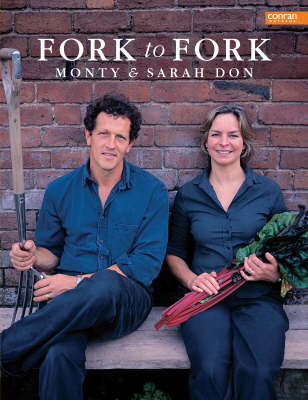
Wide awake and restless last night, no doubt worrying about the storm damage likely through the night. I padded downstairs and raided the study for my sleeping tablets, (that's my favourite Elizabeth David, glossy pictures from Frances Mayes and Fork to Fork by Monty and Sarah Don.) These soothing tomes never fail to settle me down for sleep. Wonderful.

Monty and Sarah write how seed sowing in their part of Herefordshire begins in earnest on Valentine's Day. Right then, the bar's set then! This morning, after a quick tour of the garden, house and outbuildings to check all survived the storms intact, its back to the study and a delicious rummage through my Tiffany-blue seed box. In February's section I have packets of some of my most favourite annual flowers, stocks. I saved seeds from last summer's flowers, "Ten Week Mixed", more about this in a later post. These came up in a beautiful range of soft lilacs, pinks and creams and stand about 12" tall, so were perfect for the front of borders around the roses, iris and in between the herbs near the terrace. I've also some "Giant Perfection Mix" stocks, growing about 18" tall and so perfect for cut flowers for the house this summer. I love the spicy, nutmeg/cinnamon scent these workhorses give out. Perfect. I've also a packet of Penstemon "Sensation Mix", good perennial fillers for the borders.

And then we come to the vegetable seeds! Excitement mounting, I flick through carrots "Early Scarlet Horn," broccoli "Waltham 29," a packet of Halcyon Sweet Genovese basil, and then its on to the tomatoes. Two packets of "Costoluto fiorentino", the big misshapen monsters and the smaller plum tomatoes "Roma." Basil and tomatoes, all I need now is a few bulbs of garlic and I'm ready for heaven! Tucked at the back of February's section is a box of peas I picked up in Cora last year, "Tres Hatif D'Annonay." Tiny colourless bullets rattling round inside comfortingly. I'm all set for summer.

Thursday, January 18, 2007

Gale Force Winds and Treacherous Gardening Conditions

This morning opened with gale force winds across the country bringing trees down, fences taking to the air and appalling injuries. The accompanying heavy rains caused local flooding and crazily deep road floods making the school run over the mountains treacherous. Mind you, I drive a diesel, so I rather took the opportunity to give the underside and doors of the car a good old clean by heading through the road floods with enthusiasm... (enthusiasm not foolhardiness, and only on roads empty of other drivers and pedestrians... honest!)
A perfect day to sow brassica seeds in the glass house. I filled my favourite 6x9-plug seed trays three-quarters full with compost (peat-free of course), and then laid them out across the opened up inside of the compost bag, knelt down on the terracotta floor tiles and began to sow at eye level. The rain pounding down on the glass sheets scoured away the winter's grime, and as the skies cleared the sun came streaming through and lit the steam from my tea as it danced upwards. Silence, warmth, still air, seeds to sow, labels to write, dreams to ferment. The transmigration of dream into salad.
Here's the laundry list:
The Nicotiana joined the Mignonette strawberry seeds sown at the beginning of the year, in the heated propagation unit.