Translate

Saturday, December 30, 2006

Tip of the Day: Death Clock

One of the most delicious ways to spend a Saturday, especially one that's cold and rainy like today, is to collect the papers early, make a cup of tea and settle down to read them against a backdrop to Saturday Kitchen. I got as far as reading the regular IT advice page written by Rick Maybury and thought I'd just check something on his webpage www.rickmaybury.com. I clicked on the internet, found the page, then surfed onto his tip of the day, reproduced below in its full gory horror.
"This probably sounds a bit mawkish but what with all this New Year malarkey, good intentions and broken resolutions, this might be a good time to think about when you are going to die… If you still need any prompting to give up fags and alcohol, or loose a bit of weight then just tap your details into the Death Clock and see how long you’ve got to go. Of course the result you get is only an estimate, but the principles behind the clock are sound and if your lifestyle is on the risky side then this might just be the nudge you need to stick to those resolutions. I’m definitely going to make the most of my remaining 700 million seconds..."
Suddenly that second piece of gingerbread doesn't look quite so delicious.

Friday, December 29, 2006

Sorting Through Seed Packets

Tucked up in the dining room last night with my duck-egg blue filing box stuffed with seed packets. I laid them all out across the table, and wondered at the amount. Really, I ought to stop buying tomato seeds, but the packets just seem to call out to me from the entrance of garden centres.
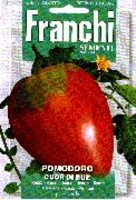
I think its the huge fat red colour that appears to shine like a horticultural beacon, promising me summer sunshine, lunches on the terrace, the chink of cutlery on plates and food in my tummy. All that from a packet of seeds. The most enticing packets are Franchi. As an example of horticultural pornography they are second to none. I tried to upload their packet of costoluto fiorentino tomatoes, but the picture transferred too small to really appreciate the scarlet enticement. And their section on lettuces makes me want to grow a mixed bed just to lie down amongst them midsummer.
I sorted the seeds out into months for planting. Unbelieveably, next Tuesday January 1st marks the start of the strawberry sowing season, and this morning I checked that I have fresh compost and a good supply of 60-plug seed trays. I really can't be bothered with all that pricking out business. If you sow your seeds into one large tray, then you have to face the inevitable pricking out and potting on. It's so much quicker and I think less stressful for seedlings to germinate in their own little plug, surrounded by their companions. Last year I had a crack at growing Golden Alexandra strawberries, but didn't get the germination heat right and they all failed. This year I'm trying Mignonette. Fingers crossed, and by May I might have enough of these darling little alpine strawberries to squish into whipped cream on summer scones.
"Live as if you are going to die tomorrow. Garden as if you are going to live forever." Kipling was right. And happy Eid to you too xxx

Wednesday, December 27, 2006

Philippa Pearce January 23, 1920 - December 21, 2006


Published today in The Times, the obituary of my favourite children's author, Philippa Pearce.

"In 1958 Philippa Pearce published Tom’s Midnight Garden. The Times Literary Supplement called it the only undoubted children’s classic since Alice’s Adventures in Wonderland, and Marghanita Laski recruited her to sit on the Arts Council literature panel which she chaired.
Tom’s Midnight Garden has never been out of print and continues to be loved by children, parents, teachers and librarians. Its fame spread about the world: in Japan its author was mobbed in the street, elsewhere she was lionised.

"Ann Philippa Pearce was born in 1920 in Great Shelford, a village outside Cambridge, where her father was a miller on the river that was at the centre of her first book, Minnow on the Say (1955). For generations the family had been millers, and her mother came from similar yeoman stock. It was a stable background for the four children, who lived close to nature and animals, to their father’s work, to a friendly village, and Pearce’s books were steeped in these kind of childhood experiences.
"Late in life she set down a charming mélange of reflections on these past times, privately printed as Logbook (2000), whose title punned on the old tree trunk in her garden where she liked to sit. It featured too in her recent story of a bewitched mole, The Little Gentleman.
Pearce went to the Perse School for Girls in Cambridge, then to Girton College where she read English and history. After graduating, she joined the Civil Service but soon moved to more congenial work as a producer for the BBC schools broadcasting department and then as an editor in the education division of Oxford University Press. In 1960 she moved on to oversee children’s books for André Deutsch.
"Pearce brought high professionalism and sensitivity to editorial commissions and to working with other people’s texts, whether in her adaptation of George Sand’s Wings of Courage (1982) and, as a picture book, Beauty and the Beast (1972), or in her magical conversion of the tangled memoirs of Sir Brian Fairfax-Lucy into that most moving of children’s books, The Children of the House (1968). Under the name of Warrener she produced texts to celebrate the 50th anniversary of the Bunnykins characters on Royal Doulton’s nursery pottery.

"Pearce married Martin Christie in 1963 but was widowed two years later, by which time she had a daughter. She had moved to Gospel Oak, London, where she worked freelance until eventually moving back to Great Shelford.
"Her creative writing changed markedly after Tom’s Midnight Garden. In its successor, A Dog So Small, which deals with a boy’s desire to own a dog, Pearce developed the strain of naturalism, a care for the everyday, that was to characterise her later storytelling.
"Much of her later work took the form of short stories such as The Elm Street Lot, originally written for the BBC’s Jackanory (1969) and What the Neighbours Did (1972), along with some tales of the supernatural. But two longer works achieved a remarkable fusion of story with insight into troubled characters: The Battle of Bubble and Squeak (1978), which won the Whitbread Children’s Book Award, and The Way to Sattin Shore (1983).
"Settled into the familiar scenes of her own childhood, Pearce became again the countrywoman she had always seemed, self-sufficient in vegetables and fruit from her own garden, with chickens at one end, a goat (for cheese and milk) at the other, a dog and a cat and, in the meadow, the child’s pony. Keeping a hospitable house ran parallel with literary work. She reviewed for the TLS and The Guardian, was appointed OBE in 1997 and elected a Fellow of the Royal Society of Literature.
"A woman of apparent serenity with an inner life that may have been more turbulent than many suspected, she had, perhaps supremely, a quality of integrity. She could be trusted; she had principles that she lived by and friends and family to whom she was loyal, a certain stubbornness, a tender heart, great warmth when it was needed, and honesty in all things. Children, who see through the phony, liked the world she put into her books, which was hardly surprising since it reflected her qualities.
"Pearce took great interest in the establishment of Seven Stories, the centre for children’s books in Newcastle upon Tyne, whose opening exhibition had a section on her work. It was during a visit to the centre that she had the stroke from which she died.
"Philippa Pearce, OBE, writer, was born on January 23, 1920. She died on December 21, aged 86

Tuesday, December 26, 2006

Thank You Father Christmas

I cannot understand people who fail to issue their loved ones with a written Christmas list in early December. The advent of the internet made Christmas shopping infinitely simple. Compose said list in Word, add hyperlinks to the specific webpages that detail not only the object of your desire but also the correct size, colour, delivery details and payment options, and Bob's Your Uncle! A happy and fruitful Christmas. The right size, the appropriate colour, the right author, and the absolute joy of knowing there is no exchange or refund queue to join 48 hours later. Make your Christmas list with lots of choices, and the surprise comes in not getting everything (how boring is that?), but in wondering which of the lovely, gorgeous presents Santa brings!
Of course, some may say, "Oh how boring, knowing exactly what you are going to get!" Yeah right! As if women all over the world are just dying to receive a pile of presents that says loud and clear, "I couldn't be bothered to pay enough attention to you to determine what colours you actually like to wear, which authors you love to read, and most importantly of all, which variety of borlotti bean you want to grow next year." Internet-linked Christmas present lists, the mark of a grown-up and a grown-up relationship.
Here's part of the laundry list:

Monday, December 25, 2006

Christmas in North East Suffolk

"Grandmother always excelled herself at the Christmas dinner. First, there was a hot mutton pie, with oyster patties, then a huge goose, one which had gobbled up many a tit-bit to hasten its own demise, with attendant vegetables. Ending up with a lemon pudding, plum porridge, junket, apple fritters.

"And should there be any room, a mince pie, baked in the old-fashioned coffin-shaped crust (learnt of her mother) to represent the cratch or manger in which the Holy Child was laid. What more would you, save a glass or two of harvet ale laced with gin, drunk from tall glasses (like old champagne) kept by grandmother in the top part of her corner cupboard. Or, as an especial treat, one of the new sherry wine, the oil of which lingered lovingly on the old cut glasses. Or syllabubs made of whipped cream (whipped until the arm ached) and also served in tall glasses."

Allan Jobson An Hour-Glass on the Run
"And then came tea, which was another feast to wait on digestion. Home sweet-pickled ham, wanmill cheese, home-made bread and butter, cakes and rusks, washed down with strong tea (Soochong flavoured with Pekoe, costing six shillings a pound) and cream in old Worcester noggins looking like molten gold. But before tea, as was her daily custom, grandmother would drink a glass of cowslip wine."

Sunday, December 24, 2006

Holidays Are Coming, Holidays Are Coming

What was the global head of Coca Cola thinking, when he replaced the iconic "Holidays Are Coming" advert with that fat, scary pervert dressed up as Santa? How are we supposed to know when the end of term is coming if the glittery red trucks and world famous sound track don't appear in the last week of school? Shame on you global head of Coca Cola. Time to retire mate. Millions of YouTube fans can't be wrong.

Saturday, December 23, 2006

Bakewell Farmers' Market, Last Saturday of the Month

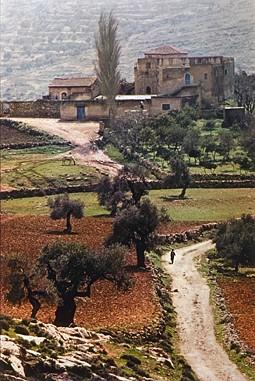
Up early and off to Bakewell farmers market. We parked on the roadside and walked the half mile or so to the Agricultural Business Centre, shivering a bit against the cold and excitement! Meat and produce inside, hot food stalls outside, (oh how I love street food; you can tell everything about a country by its food, and especially by its street food. I fell in love to a backdrop of Palestinian food...) We're here this morning for sausages. Lots of sausages. I have in mind plates piled high with fluffy mashed potato, topped with two or three meaty bangers, and pools of rich, bootleather brown onion gravy. We bought six packets, all different varieties and including the famous (well, famous in our part of Derbyshire), buffalo bangers and Welsh Dragon sausages. I'd seen a herd of buffalo on the school run over the mountains one morning during the autumn, and thought at first I was hallucinating. And here we are, about to eat them.
And a large breast of lamb for 1.50£. I shall bone it out and stuff it with breadcrumbs and lots of onions sweated off in olive oil and probably too much salt, then mixed with winter herbs cut from the garden and roasted off until the copious, buttery lamb fat runs and crisps up the whole garlic heads, potatoes and root vegetables surrounding it.
Outside now, laden with bags we stopped at the stall selling ostrich burgers. Meaty and delicious, although the bread rolls were too cold but why complain when its a little above freezing out here! Then back home to cut a savoy cabbage squeaky fresh from the garden, boil some potatoes and get the sausages into the pan.

Christmas Baking, and My Mojo Returns

Swept, polished, tidied to an inch of its life, the house is ready. The white window ledges now hold nothing but thick strings of white fairy lights; the tree is up and beautifully decorated; cards are written and sent; and finally the Christmas wreaths made and hung. Phew. A busy end to a busy year.
For the last year or so my baking has been all to cock; just couldn't get the timings right so the cakes were singed at the edges, or too dry or the pastry just didn't come right, or spices didn't really give the flavour I'd planned. Actually, the more I think back over this past year, the more I realise Laura Esquivel got it just about right when she wrote Like Water For Chocolate. I stood in the kitchen on Friday morning, cup of tea in hand discussing this with merci beaucoup enfant deux. "You're taking your baking skills for granted," she said. "Go back to basics and follow the recipes, one by one, and stop doing hundreds of things at once." I looked at her, opened mouthed with amazement! I have raised a genius.
I began with shortcrust pastry. Carefully measured the flours (plain and self-raising, half and half), sifted into my largest mixing bowl, then added the fats (pura and stork, again half and half) cut up into little cubes, then rubbed to breadcrumbs. Perfect! Added just enough icey water to bind, then rolled out and cut into rounds. Placed carefully into the baking trays and filled with mincemeat. Topped off, egg-washed and into the hot oven. Perfect!
I moved on to scones (plain and sultana), then the famous gingerbread of previous posts. It emerged from the oven perfect, springy and headily fragrant. Then brownies, always a bit tricky. But again, having the confidence to follow the far too short cooking time meant they emerged soft and chewy in the middle but actually cooked! So here are the recipes, reproduced exactly from their original form.
Gingerbread Traybake
10oz golden syrup
10oz black treacle
8oz light muscovado sugar
8oz butter
1lb self-raising flour
2 teaspoons mixed spice
2 teaspoons ground ginger
4 eggs, beaten
4 tablespoons milk
Pre-heat the oven to 160c. Grease and line the base of a 12"x9" roasting tine with greaseproof paper. Measure the syrup, treacle, sugar and butter into a large pan and heat gently until the fat has melted. Stir to combine. Remove pan from heat and stir in the dry ingredients. Add the eggs and milk and beat well until smooth. Pour the batter into the prepared cake tin. Bake for about 45-50 minutes until well risen and beginning to shrink away at the edges. Cool in the tin for a few minutes before turning out and cooling on a wire rack.
Thornton's Chocolate Brownies
200g butter
200g Thornton's dark chocolate (actually I used French Menier Patissier)
3 eggs
250g caster sugar
112g plain flour
125g walnuts, roughly chopped
Pre-heat the oven to 170c. Line a deep baking tray 12"x8" with greaseproof paper. Melt the butter and chocolate together over a pan of barely simmering water. Beat the eggs and sugar together for 2-3 minutes until pale. Add the melted chocolate and mix well to blend. Add the flour and walnuts and stir to combine. Pour into the tin and bake for exactly 35 minutes. The top will look cracked and flaky - this is normal. Leave to cool in the tin, then lift out and cut into squares. Alternatively, serve warm from the tin.
So now I have cake tins stacked in the pantry, easily accessible and full with my Christmas baking made with love and care. The gingerbread will become stickier the longer its left to mature, because the syrup and treacle won't solidify, but long to return to their liquid state. The scones were eaten for tea, topped with a little whipped cream and a blodge of this year's jam. The mince pies and brownies will both need replenishing. My mojo's back.

Tuesday, December 19, 2006

Lunch With Girlfriends, and a Rather Surprising Gift

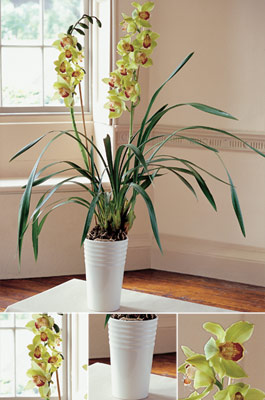
Lunch out with the girls today. 9.30am start. Well, we do have lots to talk about, and we wanted to get in a spot of shopping (specifically sweaters and drawers) beforehand. Lunch was really a two hour gossip session interspersed with "oh how lovely, thank you" as the waiters brought each course to us. After lunch, our reserves of gossip exhausted, we began the drive back, dropping each person off along the way until there was just me and the cymbidium orchid in the car. Exactly! Just how did I manage to end up with a cymbidium in the car? It's not even a politely-sized house plant either. It's in a massive 15" pot and already stands some 30" high.
Here is a picture taken from the M&S website. It shows a ridiculously small cymbidium orchid, and nowhere do I see any reference to the word "triffid..."
I'm not very clever with houseplants. Actually, I invariably kill them. Perhaps that's the thinking behind the "mature" specimen.

Sunday, December 17, 2006

Midpoint in a Busy Weekend

I'd planned to make the Christmas greenery this weekend. I cut back the honeysuckles and summer flowering clematis at the beginning of December, making a heap as I went along. After stopping for a cup of tea and a gossip with a neighbour, I returned to the prunings heap with fresh eyes. "They'll make rather fine wreaths," I thought, and rescued some huge lengths. They have been hanging on a nail in the tool shed drying off ever since. I planned to twist them into rough circles, and tie in bunches of herbs, trails of ivy, and the red berries from skimmias and hollies. I brought back bundles of chillies from Prague, but don't really want to waste them on outside door wreaths when I could leave them hanging up in the pantry, a constant reminder of a great holiday and the promise of fiery goodness in winter soups.
Then merci beaucoup enfant deux needed taxiing about last night, and our tea and toast and marmite afterwards meant a later night than either of us planned, and left first thing this morning to collect beloved firstborn. So the Christmas greenery can wait until tomorrow. Tired now. All safely gathered home.
Wall sconce outside St Wenceslas' Chapel, St Vitas' Cathedral Prague

Saturday, December 16, 2006

Some Very Fine English Roses

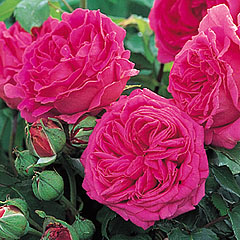
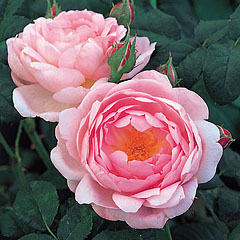
This year has seen the most peculiar weather. The long, cold winter that opened 2006 delayed spring by about three weeks; then followed the scorching long summer with its prolonged rain in August; then the most lovely Indian summer from October onwards. And today I have roses in flower in my garden. Here's the laundry list, with pictures from David Austin's site - why buy roses elsewhere?
Tess of The d'Urbervilles:
These large flowers of deepest crimson make me think of richly textured velvet skirts, set off by leaves of the most perfect green. That they are named after the heroine in my favourite Thomas Hardy novel only adds to their desirability. Thank you David Austin
Mme Isaac Pereire:
These roses sit under my study window, layered and tied to wires to extend their beauty. The warm yellow stone walls of my house hold the sun's heat to encourage these roses to release their Old Rose fragrance through out the day, and particularly during the evening when the sun sets at the other side of the house. Beautifully formed, multi-flowered sprays make these roses an important part of my summer bouquets for the house.
Scepter'd Isle:
This is a workhorse of a rose, flowering early in the summer, and producing masses of blooms that keep my house supplied with vasefuls of flowers throughout the summer. There is a powerful fragrance, which David Austin describes as, "An outstanding example of the English Rose fragrance, based on the myrrh note introduced with ‘Constance Spry’."

Wednesday, December 13, 2006

Gordon Ramsey's turkey leg ballotine; 16 Nov 2002

"...Oh, and I can't find Gordon Ramsey's blasted recipe for boned out turkey legs with sausagemeat and something else stuffing. This is a key part of my Christmas feast, and since the motherboard self-destructed last month, I've lost forever..."
Or so I thought. Scouring the Times Online website I finally came up trumps. So here it is; Gordon Ramsey's recipe for turkey leg ballotine. Thank you Gordon, and my apologies for wandering from gardening.

1 large turkey leg or thigh joint
6oz wild mushrooms or chestnut mushrooms
2-3 tbsp olive oil
1 shallot, chopped finely
2 tbsp dry white wine
2 large good quality sausages or 4oz premium sausage meat
Sea salt and freshly ground black pepper

1. Slit the turkey leg lengthways and bone out taking care not to puncture the skin. Spread the meat flat on a board skin-side down.
2. Chop the mushrooms finely and sauté with the shallot in olive oil for about 5 minutes until softened. Season well then add the wine and cook for a minute. Cool.
3. Peel the skin from the sausages and mix the meat with the mushrooms. Spread the mixture inside the boned turkey leg. Roll up firmly, season the skin side and wrap tightly in oiled foil. Chill overnight.
4. To cook, place the foil parcel in a small roasting pan. Preheat the oven to 180c. Cook for 45 minutes then reduce the heat to 160c and continue cooking for another 45 minutes. Unwrap the foil for the last half hour to brown the skin.
5. Allow to stand for 10 minutes before slicing thickly. Strain the juices into a small pan. Bubble up with a splash of wine and a tablespoon of crème fraîche for a simple gravy
I don't tend to bother with step 5, due to sheer greed and impatience.

Saturday, December 09, 2006

The Start of a Busy Weekend

My day began before dawn. Warm and snug as a bug under duvet and heavy quilt, I woke slowly to silence. Ears awake first, then legs as I stretch out and turn over, then eyes as I come to. Once conscious, sleep is impossible for me, unlike merci beaucoup enfant deux, who could sleep through a nuclear attack and the ensuing nuclear winter. Pad downstairs to kitchen and make cup of tea, yawning. Stand at French windows as kettle boils and assess frost by amount of stars still visible.... oh man this is going to be a very cold morning. Make a flask and head out into my day. Return in time (just) to watch Rachel Allen on BBC1's Saturday Kitchen. I like her recipes. They work, and Jane Grigson would be proud.
Sometimes winter gardening means lots of weeding on knees. I know we all have safety boots that keep out the wet; waterproof trousers that keep our knees dry; and gloves that keep our hands safe, but please, can't someone invent a microfibre sufficiently fine to enable weeding AND keep our fingers warm?
This afternoon I peeled the last of the Turk's Turban pumpkins and made Nigel Slater's spiced pumpkin soup with soda bread scones (thanks Rachel.) Recipes to follow. Oh, and I can't find Gordon Ramsey's blasted recipe for boned out turkey legs with sausagemeat and something else stuffing. This is a key part of my Christmas feast, and since the motherboard self-destructed last month, I've lost forever...
Oh well. Could be worse. Could be Sting.

Thursday, December 07, 2006

Medlars

Medlars are the strangest looking fruit. Stranger still the accepted manner of eating them on the verge of rotting. Yuk. I picked some handfuls yesterday, and having given them a good wash in cold water, left them overnight in the kitchen. Today I shall make medlar jelly, following the same basic steps as set out in posts earlier in the autumn.
Can I find a recipe? Consulting a glossy coffee table book on preserving (biltong anyone?) and Jeremy Round's The Independent Cook drew a blank. Even Mrs Beeton had nothing to say in her second edition All About Cookery. Hurray for Jane Grigson, in English Food. Perfect. If you need something reliable always turn to Jane Grigson, my favourite cook. Here is her recipe;
Quince, Medlar, Sorb or Crab Apple Jelly
Although quinces should be ripe, medlars and sorbs are best used before they get to the softened, bletted stage when they are pleseant to eat as a dessert fruit. Crab apples should be used when they are just ripe.
Cut up the fruit after washing it. Cover it with water, and continue as in the recipe above ( or the posts below.) Precious quinces can be eked out with a proportion of windfall apples - in very thin years I have used 1/2 lb of quinces to 1 1/2 lb of apples and the jelly has still been delicious. These jellies are not as tart (as the ones above) but they go well with pork. Medlar jelly is good with poultry or game.
So there you have it. Jane has spoken. Picture to follow.

Wednesday, December 06, 2006

Medlars and rosebuds, Autumn's last offerings

The back walls of the glasshouse were white washed whilst I was in Prague, and now look fresh, clean and wholesome. Already I'm imagining a row of big fat shiny blue Chinese pots, filled with the glossy leaves that seem to mark out citrus trees in the nursery. Frances Mayes writes about fabulous Scicilian lemons, the Meyer lemon? I need to reread.

I pick the last of the season's rosebuds, and stash them into my pocket. I shall make rose petal bathing salts, adding some lavender seed heads and leaf trimmings. One of the loveliest things about Prague was the swishy hotel, all glass doors, thick, heavy bed linen and a marble-rich bathroom complete with toiletries from the White Company. How cool is that? Well, not as cool as the range of bathing salts for sale in Prague's vast number of Manufaktura stores. Bath salts? Isn't that a bit "granny?"

Not after smelling this Dead Sea salt enriched with melissa and calendula flowers; cedar, ginger and oak bark; or simply lavender flowers. I couldn't choose between them, so bought all three. And having trolled all around Prague each day sightseeing, it was bliss to return to the hotel, drop some ice cubes into a tall glass and top up with something lovely from the guest's honesty bar (how cool is that!), run a bath and sprinkle in the bathing salts and just float away.

So here's my version of Prague's bathing salts;
Take a kilo bag of rock salt from the Camargue*, that you bought in Cora during the summer. Empty into a large ceramic mixing bowl and add the rose buds and rose petals from the garden, together with any late lavender flowers and a couple of good handfuls of lavender leaves snipped into shards. Mix and mix with your hands and gently decant into bowls or an old white ceramic salt pig. Arrange bowls on window ledges around the house, and place the salt pig on the bathroom shelf, easily reached after a day spent in safety boots. Lovely.

* Of course you don't have to use a particular type of sea salt, just one that you enjoyed buying and use about the kitchen. The coarser the better.

Sunday, December 03, 2006

Christmas Eve 1914 ... Stille Nacht, Heilige Nacht ...

From the Guardian newspaper online, Guardian Unlimited
When Peace Broke Out : Special Report Christmas 2001
British and German soldiers made history in 1914 when they stopped shooting and started to sing carols and play football together. Malcolm Brown on one of the most heartening Christmas stories of modern times Monday December 24, 2001.
"The facts almost beggar belief. At the first Christmas of a hideous war, Germans and British sang carols to each other, lit each other's cigarettes in no man's land, exchanged souvenirs, took group photographs, even played football. Some sort of accommodation with the enemy, from cheerful waves and shouted greetings to full-scale fraternisation, took place over two-thirds of the 30 miles of the western front held by the British Expeditionary Force.
"And then, to all intents, the story was forgotten. It disappeared under the gas clouds of Ypres and the colossal casualty lists of the Somme and Passchendaele. Thus, looking back on that stunning Christmas from the 1920s, a former infantryman who had shared the camaraderie across the lines could write: "Men who joined us later were inclined to disbelieve us when we spoke of the incident, and no wonder, for as the months rolled by, we who were actually there could hardly realise that it had happened, except for the fact that every little detail stood out well in our memory."
"Every little detail" - the devil is often said to be in the detail, but not in this story. On Christmas Eve at Plugstreet Wood, Germans put Christmas trees on the parapet of their front-line trench and sang Stille Nacht (Silent Night), then largely unfamiliar to British ears but instantly acknowledged as a carol of extraordinary beauty. Moved to respond the territorials opposite struck up with The First Noël. So it continued until, when the British sang O Come, All Ye Faithful, they heard the Germans joining in with the Latin words Adeste Fideles. Recalling the event many years later, one former soldier commented: "I thought this a most extraordinary thing - two nations both singing the same carol in the middle of the war."
"A memorable joint burial service between the trenches on Christmas morning offers another uplifting detail. The prayers and readings were spoken first in English by a battalion chaplain and then in German by a young divinity student. "It was an extraordinary and most wonderful sight," wrote one witness. "The Germans formed up on one side, the English on the other, the officers standing in front, every head bared. I think it was a sight one will never see again."
"By early 1915, however, it became clear that the interlude was, or soon would be, over. The Manchester Guardian spoke the necessary words in an article of January 7: "'But they went back into their trenches,' a perfectly enlightened and quite inhuman observer from another planet would perhaps say, 'and are now hard at it again, slaying and being slain.'
Now at every Christmas personal accounts of the truce are regularly read from pulpits, on television, on radio. At a time when the world is yet again at war, this strange event of 1914 - with its message of common humanity and goodwill between enemies - has a special relevance. Far from losing its attraction, it is a story that seems to gain in resonance and potency as the years go by."